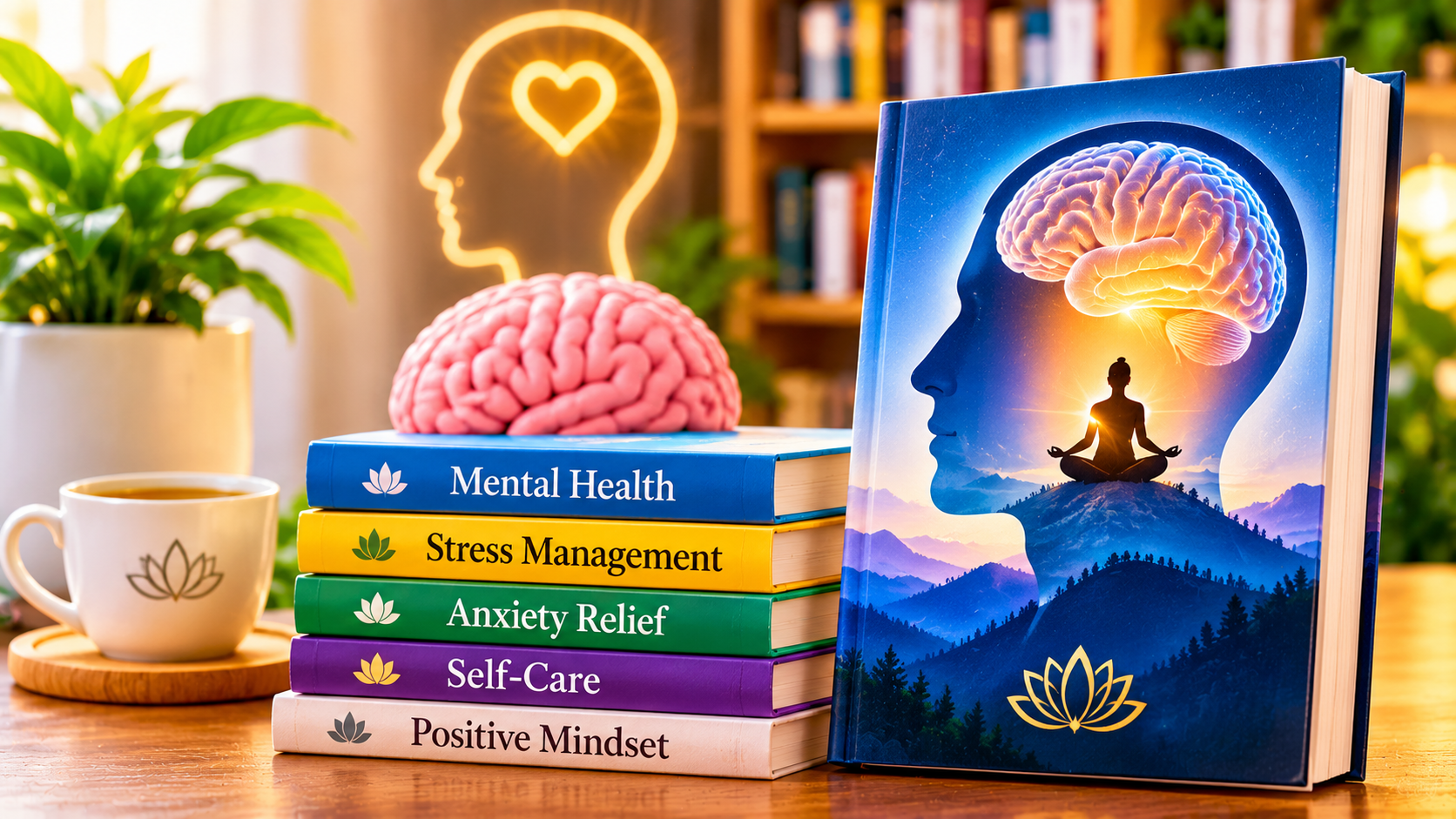
Mental health is an essential part of overall well-being, influencing how people think, feel, behave, build relationships, and handle everyday challenges. Just as people take steps to maintain their physical health, looking after emotional and psychological well-being deserves regular attention. One accessible way to learn more about mental health is through reading. The right books can help readers understand their emotions, recognize unhelpful thought patterns, develop healthier habits, and learn practical ways to cope with difficult situations.
Mental health books cover a wide range of subjects, including anxiety, depression, stress management, mindfulness, self-esteem, trauma, relationships, and personal growth. Some are written by psychologists and mental health professionals, while others share personal experiences that help readers feel less alone. Workbooks may also include exercises and techniques based on approaches such as cognitive behavioral therapy (CBT).
However, not every book is suitable for every reader. A book can provide education and helpful strategies, but it should not be considered a replacement for professional assessment or treatment when someone is experiencing significant mental health difficulties. Choosing reliable, relevant reading material can make the experience more useful and meaningful.
What Are Mental Health Books?
Mental health books are educational, practical, or personal-development resources that explore psychological well-being and emotional health. They help readers understand how thoughts, feelings, behaviors, experiences, and relationships influence everyday life.
These books may explain common mental health conditions, introduce coping strategies, or offer guidance for developing healthier routines. Some focus on a specific concern, such as anxiety or depression, while others cover broader subjects such as self-compassion, emotional resilience, and mindfulness.
There are several common types of mental health books:
- Educational books: Explain psychological concepts, mental health conditions, and treatment approaches.
- Self-help books: Offer practical strategies for managing everyday emotional challenges.
- Therapy workbooks: Include exercises, worksheets, and structured activities based on therapeutic methods.
- Memoirs and personal stories: Share firsthand experiences of mental health challenges and recovery.
- Mindfulness books: Teach ways to pay attention to the present moment and respond more thoughtfully to emotions.
The best choice depends on what a reader wants to understand or improve. Someone interested in managing worry may benefit from an anxiety workbook, while a person looking to develop self-compassion may prefer a book focused on emotional awareness and personal growth.
Best Mental Health Books to Read
There are many useful books covering different aspects of psychological well-being. The following titles are widely recognized in mental health education and professional reading recommendations.
1. The Anxiety and Phobia Workbook by Edmund J. Bourne
This workbook is designed for readers who want to understand anxiety, panic, and phobias. It introduces practical techniques for identifying anxious thought patterns, managing physical stress responses, and gradually facing situations that create fear.
The book discusses breathing exercises, relaxation, cognitive behavioral techniques, and lifestyle habits. Its structured approach makes it useful for readers who prefer practical activities instead of only reading explanations.
2. Mind Over Mood by Dennis Greenberger and Christine A. Padesky
Mind Over Mood is a practical workbook based on cognitive behavioral therapy. It helps readers understand the connection between thoughts, emotions, physical reactions, and behaviors.
The exercises encourage readers to recognize unhelpful thinking patterns and examine whether their thoughts accurately reflect a situation. It covers concerns such as anxiety, depression, anger, guilt, and low self-esteem.
Mental health professionals may also use this workbook as a resource alongside therapy.
3. Feeling Good: The New Mood Therapy by David D. Burns
Feeling Good introduces readers to cognitive behavioral ideas and explains how negative thinking patterns can influence mood.
The book explores common thinking habits, including all-or-nothing thinking, overgeneralization, and jumping to conclusions. It encourages readers to examine their thoughts and consider more balanced interpretations.
It can be a useful introduction for people interested in understanding the relationship between thinking patterns and emotional well-being.
4. The Happiness Trap by Russ Harris
The Happiness Trap introduces acceptance and commitment therapy (ACT). Rather than suggesting that people must eliminate every unpleasant thought or emotion, it explains how they can change their relationship with difficult internal experiences.
Readers learn about acceptance, mindfulness, personal values, and taking meaningful action. The approach can help people understand why constantly trying to control uncomfortable thoughts may sometimes make everyday struggles more difficult.
5. The Mindful Way Through Depression by Mark Williams, John Teasdale, Zindel Segal, and Jon Kabat-Zinn
This book explores mindfulness-based approaches to understanding low mood and recurring negative thought patterns. It explains how rumination and self-criticism can contribute to emotional distress.
Readers are introduced to ways of paying attention to thoughts and feelings without automatically reacting to them. The book is especially relevant to people interested in mindfulness and its relationship with emotional well-being.
6. Get Out of Your Mind and Into Your Life by Steven C. Hayes and Spencer Smith
This book introduces acceptance and commitment therapy through practical exercises. It focuses on psychological flexibility, which involves making room for difficult experiences while continuing to act according to personal values.
Readers explore how to respond differently to uncomfortable thoughts and emotions instead of allowing them to control every decision.
Mental Health Books for Different Needs
Choosing a book based on a particular concern can make reading more focused. Instead of selecting a popular title without considering its subject, readers can look for material that addresses the challenges they want to understand.
Books for Anxiety
Anxiety-related books often explain how worry, fear, physical sensations, and avoidance behaviors interact. They may include breathing exercises, thought-recording activities, relaxation techniques, and gradual exposure strategies.
Some useful options include:
- The Anxiety and Phobia Workbook by Edmund J. Bourne
- The Anxiety and Worry Workbook by David A. Clark and Aaron T. Beck
- Rewire Your Anxious Brain by Catherine M. Pittman and Elizabeth M. Karle
These books can help readers understand anxiety and explore practical coping techniques. A workbook based on cognitive behavioral principles may be particularly useful for someone who prefers structured exercises.
Books for Depression
Books about depression explore low mood, reduced motivation, negative thinking, self-criticism, and changes in everyday functioning. Some focus on behavioral activation, while others introduce mindfulness or cognitive behavioral approaches.
Readers may consider:
- The Mindful Way Through Depression by Mark Williams and co-authors
- Feeling Good by David D. Burns
- Activating Happiness by Rachel Hershenberg
These titles offer different perspectives on emotional difficulties. They should be viewed as educational resources rather than substitutes for professional care.
Books for Stress Management
Stress-management books help readers understand how daily pressures affect thoughts, emotions, sleep, and behavior. Many explore relaxation, time management, mindfulness, and healthy boundaries.
A useful reading choice is a book that provides realistic exercises rather than promising to eliminate stress completely. Learning to recognize stress triggers and respond more effectively can support healthier routines.
Books for Self-Esteem and Self-Compassion
Self-esteem and self-compassion books focus on how people evaluate themselves, respond to mistakes, and manage self-critical thoughts.
Self-Compassion by Kristin Neff is a well-known option. It explores how treating yourself with understanding and kindness can create a healthier relationship with personal challenges.
Readers who frequently compare themselves with others or struggle with perfectionism may find this subject particularly relevant.
Books for Mindfulness
Mindfulness books introduce practices that encourage awareness of the present moment. They often discuss breathing, meditation, observation, and responding to thoughts without immediately judging them.
The Mindful Way Through Depression is one option for readers interested in mindfulness and emotional health. Mindfulness-based workbooks can also help people develop a regular practice through guided activities.
Benefits of Reading Mental Health Books
Reading about mental health can provide several benefits when the information is reliable and relevant to the reader’s needs.
Better Understanding of Emotions
People sometimes experience sadness, frustration, fear, or worry without fully understanding what triggers these feelings. Mental health books can explain common emotional responses and help readers identify patterns in their thoughts and behaviors.
For example, a book about anxiety may explain why uncertainty creates worry or why avoiding a feared situation can sometimes maintain anxiety over time. Understanding these patterns can make emotional experiences easier to recognize.
Practical Coping Strategies
Many self-help books include exercises that readers can apply in everyday situations. These may involve journaling, relaxation, thought tracking, mindfulness, or breaking large tasks into smaller steps.
Practical strategies can encourage readers to respond more thoughtfully to everyday challenges instead of relying only on habits that may not be helpful.
Improved Self-Awareness
Reading encourages reflection. When readers encounter examples that resemble their own experiences, they may become more aware of their reactions, personal values, and emotional needs.
This awareness can help people identify situations that create stress and recognize which habits support their well-being.
Reduced Feelings of Isolation
Personal stories and memoirs can help readers understand that other people also experience difficult emotional periods. Learning about someone else’s experience may reduce feelings of isolation and encourage more open conversations about mental health.
However, individual experiences are different. A memoir should not be treated as a universal guide to diagnosis or recovery.
Encouragement to Seek Support
Reliable mental health books often explain different forms of professional support and help readers understand when additional assistance may be appropriate.
Learning about therapy, counseling, and mental health conditions can make it easier to prepare questions for a qualified professional.
How to Choose the Right Mental Health Book
With so many books available, choosing one can feel overwhelming. A few simple considerations can help readers find material that matches their interests and needs.
Identify Your Main Goal
Start by deciding what you want to learn. Are you interested in understanding anxiety, managing stress, improving self-esteem, developing mindfulness, or learning about a particular mental health condition?
A clear goal helps narrow the selection and prevents you from buying books that do not address your actual concerns.
Check the Author’s Background
Look at the author’s education, professional experience, and relevant expertise. Books written by qualified psychologists, psychiatrists, therapists, and researchers may offer a stronger foundation for understanding mental health topics.
Personal memoirs can also be valuable, but readers should distinguish personal experiences from professional guidance.
Look for Evidence-Based Information
Consider whether the book explains the ideas behind its recommendations and refers to established psychological approaches. Books that discuss CBT, ACT, mindfulness-based approaches, or other recognized methods may provide useful starting points.
Be cautious of titles that promise instant recovery, guaranteed happiness, or a complete solution to complex mental health concerns.
Read Reviews and Recommendations
Reviews can help you understand a book’s writing style, level of detail, and practical usefulness. You can also explore reading lists published by universities, mental health organizations, and professional associations.
The Anxiety and Depression Association of America, for example, maintains a collection of books covering anxiety, depression, OCD, PTSD, and related subjects.
Choose a Comfortable Reading Style
Some books use academic language, while others are conversational and include real-life examples. Workbooks provide structured exercises, whereas memoirs focus more on personal experiences.
Choose a format that makes it easier for you to stay interested and understand the information.
Are Mental Health Books a Replacement for Therapy?
Mental health books can support learning and self-reflection, but they are not a complete replacement for therapy or medical care.
A book cannot evaluate an individual’s full circumstances, provide a professional diagnosis, or create a treatment plan based on personal needs. Even books written by experienced clinicians are designed for general readers and cannot respond to every situation.
For mild everyday stress or an interest in personal development, reading may provide helpful information and practical ideas. However, persistent emotional distress, major changes in sleep or appetite, difficulty functioning, or symptoms that interfere with daily life may require professional attention.
People experiencing severe distress or thoughts of self-harm should seek immediate support from a qualified professional or local emergency service rather than relying on a book.
The most useful approach may be to combine reliable reading with professional guidance when needed. A therapist can also recommend books that are appropriate for a person’s specific goals and circumstances.
Tips for Getting the Most Out of Mental Health Books
Simply finishing a book does not guarantee that its ideas will become part of everyday life. A thoughtful reading routine can help readers understand and apply useful lessons.
Read at a Comfortable Pace
There is no need to finish a mental health book quickly. Read a few pages or one chapter at a time, especially when the subject feels emotionally challenging.
Take Notes
Write down important ideas, unfamiliar terms, and questions that come up while reading. Notes can help you remember useful information and identify topics you may want to discuss with a professional.
Try the Suggested Exercises Carefully
If a workbook includes journaling prompts, mindfulness activities, or thought records, consider trying them at a comfortable pace. You do not have to complete every exercise or follow every suggestion if it does not feel suitable.
Reflect on What You Learn
After each chapter, consider how the information relates to everyday experiences. Reflection can help connect general psychological concepts with real-life situations.
Avoid Comparing Your Experience With Others
A book may describe a particular recovery journey or coping method, but individual experiences differ. What works for one person may not work in the same way for another.
Use Reading Alongside Healthy Habits
Reading can be one part of a broader well-being routine. Regular sleep, physical activity, social connection, balanced nutrition, and professional support when needed can also contribute to overall health.
Conclusion
Mental health books can be valuable resources for understanding emotions, learning coping strategies, and developing greater self-awareness. Whether someone wants to explore anxiety, depression, stress management, mindfulness, or self-compassion, there are books covering a wide range of topics and reading preferences. Titles such as Mind Over Mood, Feeling Good, The Anxiety and Phobia Workbook, and The Happiness Trap offer different approaches to understanding psychological well-being. The most important step is choosing reliable material that matches your learning goals. Reading can encourage reflection and personal growth, but it should complement rather than replace professional mental health support when that support is needed.
Frequently Asked Questions
1. What are the best mental health books for beginners?
Beginners may consider Feeling Good by David D. Burns, Mind Over Mood by Dennis Greenberger and Christine A. Padesky, or The Happiness Trap by Russ Harris. These books introduce psychological concepts and practical approaches in an accessible format.
2. Can reading mental health books improve emotional well-being?
Reading can improve mental health awareness, introduce coping strategies, and encourage self-reflection. However, results vary between individuals, and books alone may not be sufficient for people experiencing significant mental health difficulties.
3. Which books are helpful for understanding anxiety?
The Anxiety and Phobia Workbook by Edmund J. Bourne, The Anxiety and Worry Workbook by David A. Clark and Aaron T. Beck, and Rewire Your Anxious Brain by Catherine M. Pittman and Elizabeth M. Karle are options for readers interested in understanding anxiety.
4. Are mental health workbooks better than regular books?
Neither format is automatically better. Regular books may be more suitable for learning concepts and exploring personal experiences, while workbooks offer structured exercises and activities. The right choice depends on the reader’s goals and preferences.
5. Can mental health books replace professional therapy?
No. Mental health books can provide education and self-help strategies, but they cannot replace individualized assessment, diagnosis, or treatment from a qualified mental health professional. They are best used as supportive resources when appropriate.